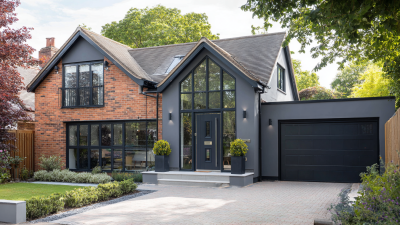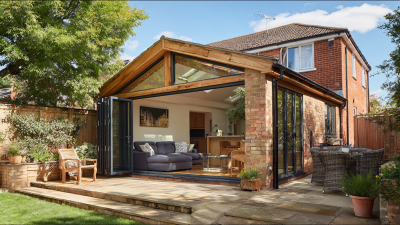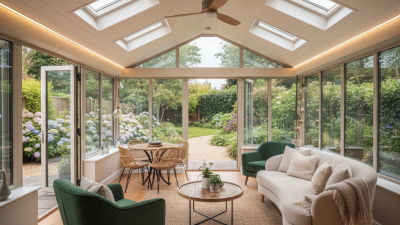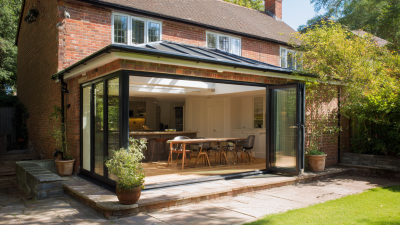
Choosing the best aluminium front doors is not simply a matter of selecting the most attractive design. A front entrance must handle rain, wind, daily traffic, security concerns, and changing temperatures. It should also feel welcoming when visitors approach the house. The right choice depends on the building’s style, doorway size, local climate, budget, and expected maintenance. A slim, dark frame may suit a modern home, while a wider profile can complement a traditional property. Small details matter, including threshold height, hinge quality, glazing, drainage, and the smoothness of the lock.
Neil Ginger, founder and CEO of Origin Global, has said, “A front door should be as individual as the home it protects.” This reflects an important point. Aluminium front doors are not automatically equal because they use the same basic material. Their performance depends on alloy quality, thermal breaks, powder coating, hardware, and manufacturing precision. A poorly specified door can feel cold, close noisily, or develop alignment problems. That would be disappointing.
My experience reviewing entrance systems suggests that the “best” door is rarely the most expensive one. It is the door that balances insulation, security, appearance, durability, and practical use. Look closely. Does the frame feel rigid? Is the handle comfortable with wet hands? Does the glazing provide privacy without making the hallway dark? These questions often reveal more than a showroom display. This guide compares the main types of aluminium front doors and explains where each option performs well, where it may compromise, and which details deserve careful attention before ordering.
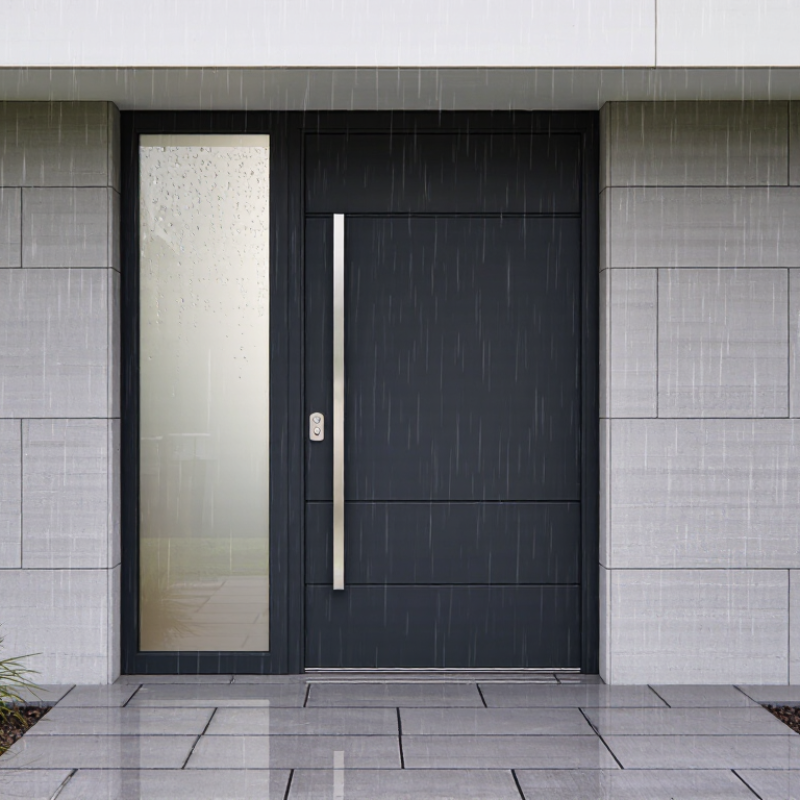
What Is the Best Type of Aluminium Front Door?
A strong aluminium front door starts with a well-designed frame, not a dramatic appearance. Aluminium resists warping, swelling, and insect damage, even through wet winters and bright summers. Its slim profiles also allow larger glass areas without making the entrance feel weak. For thermal performance, choose a thermally broken frame with insulated panels and quality weather seals. Without these features, aluminium can transfer cold indoors. That detail is often overlooked.
What Makes Aluminium Front Doors a Strong Choice
Aluminium offers excellent structural strength with relatively low weight. A properly reinforced door can support heavy glazing, secure multi-point locks, and frequent daily use. Powder-coated surfaces usually resist fading, scratches, and moisture, although poor preparation can still cause coating problems. Installation matters just as much as the material. An uneven threshold may create drafts, water entry, or difficult locking. It is easy to focus on the door slab and forget the surrounding wall. That can be an expensive mistake.
Tips
Check the frame’s thermal break, panel thickness, drainage channels, and hinge capacity. Ask for tested air, water, and wind performance. Examine a sample corner and inspect the seals closely. Avoid choosing by colour alone. A darker finish may absorb more heat in direct sunlight. Also, confirm that the opening is measured after the wall is fully prepared. Small errors become obvious every morning.
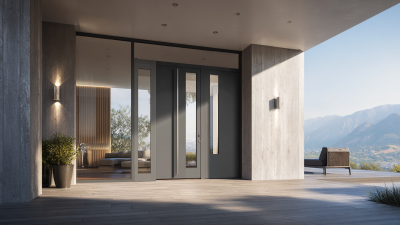
Aluminium front doors suit many homes because their slim frames create a clean, durable entrance. The best style depends on the building’s age, proportions, and daylight needs. A flat-panel door often complements modern homes with square windows and simple façades. For period properties, a divided-light design can soften aluminium’s sharper appearance. It may not reproduce every historic detail perfectly, but it can respect the original rhythm.
Glazed aluminium doors work well in darker hallways or narrow terraces. Clear glass brings daylight inside, while frosted or textured glass improves privacy. Homes in exposed areas need more than attractive lines. Look for thermally broken frames, reliable weather seals, and a low U-factor. The U.S. Department of Energy reports that windows account for about 25–30% of residential heating and cooling energy use. A well-specified entrance can therefore support comfort, although the door is only one part of the building envelope. The National Fenestration Rating Council also recommends comparing U-factor and solar heat gain ratings, not appearance alone.
Tips: Match the frame colour with window frames and roof details. Choose a wider glazed panel for shaded entrances. Check the threshold before ordering, especially for wheelchair access. Ask for tested air, water, and wind performance. A darker finish can look dramatic, but it may show dust and scratches more clearly. I would also request a physical sample; screen colours can mislead. Local climate and installation quality matter more than fashionable styling.
What Is the Best Type of Aluminium Front Door?
Thermal performance should lead your comparison. The key figure is the whole-door U-value, measured in W/m²K. Lower values indicate less heat transfer through the complete door assembly. Do not judge the frame alone. The panel, glass, threshold, seals, and hardware all affect results. The U.S. Department of Energy reports that windows can account for 25–30% of residential heating and cooling energy use. A well-designed entrance door helps reduce similar unwanted losses around the building envelope.
Look for a thermally broken aluminium frame. This design separates the inner and outer metal sections with an insulating strip. Low-emissivity double or triple glazing can improve the glazed area further. Ask for certified whole-door test results, not only laboratory figures for the glass. Air leakage also matters. EN 12207 classifies air permeability, while EN 14351-1 covers performance requirements for external doors and windows. Check the stated class and test conditions carefully. Numbers can look impressive when the threshold is excluded.
A lower U-value is not automatically the best choice. A poorly installed door may leak around the frame, especially near the sill. On site, inspect continuous gaskets, insulated thresholds, and sealed fixing points. Thermal imaging can reveal cold edges during winter, although it needs suitable temperature differences. The International Energy Agency reports that buildings and construction represent about 30% of global energy demand. That figure makes efficiency important, but comfort matters too. I would compare verified data, installation quality, and glass area together. The perfect specification does not exist. Sometimes, the overlooked threshold decides performance.
| Aluminium Front Door Configuration | Typical Whole-Door U-Value (W/m²·K) |
Thermal Break | Typical Glazing | Insulated Panel Performance | Air Permeability | Energy Efficiency | Best Use |
|---|---|---|---|---|---|---|---|
| Basic aluminium frame with single glazing | Approximately 4.5–5.8 | Usually absent or limited | Single clear glass, typically 4–6 mm | Often not insulated | Highly dependent on seals and installation; generally weaker | Low | Warm climates, low-occupancy buildings, or internal applications where heating demand is limited |
| Non-thermally broken aluminium frame with double glazing | Approximately 2.8–4.0 | Absent | Double glazing with an air or inert-gas cavity | May be insulated, but frame bridging remains significant | Can be good if fitted with continuous compression seals | Low to moderate | Budget projects in mild climates where frame heat loss is less critical |
| Thermally broken aluminium frame with double glazing | Approximately 1.4–2.2 | Polyamide or similar insulating barrier separates the inner and outer aluminium sections | Low-emissivity double glazing, commonly 24–28 mm overall thickness | Insulated core commonly available | Good when the door has continuous gaskets and accurate installation | Good | Most temperate climates and general residential use |
| Thermally broken aluminium frame with high-performance double glazing | Approximately 1.1–1.6 | Enhanced thermal barrier with reduced conductive paths | Low-emissivity glass with warm-edge spacer and inert-gas cavity | High-density insulated panel or insulated core | Very good when tested and installed correctly | Very good | Energy-conscious homes in cool or mixed climates |
| Thermally broken aluminium frame with triple glazing | Approximately 0.8–1.3 | Advanced thermal barrier with carefully insulated frame construction | Triple low-emissivity glazing with two insulated cavities | High-performance insulated panel recommended for balanced performance | Very good to excellent, subject to certified testing | Excellent | Cold climates, highly insulated homes, and projects targeting low operational energy use |
| Thermally broken aluminium door with a solid insulated panel | Approximately 0.9–1.6 | Required for strong thermal performance | Minimal glazing or no glazing | Rigid polyurethane, polyisocyanurate, mineral wool, or composite insulated core | Good to excellent with multi-point locking and continuous seals | Very good to excellent | Cold or windy locations where heat loss through glazing should be minimized |
| Thermally broken aluminium door with large glazed area | Approximately 1.3–2.2 | Required; larger frame sections may improve performance | Double or triple low-emissivity glazing, depending on climate | Limited panel area; glazing becomes the main thermal component | Good to excellent if the frame, seals, threshold, and installation are properly detailed | Good to very good | Entrances prioritizing daylight and visibility; solar-control glass may be needed in hot climates |
What Is the Best Type of Aluminium Front Door?
The best aluminium front door balances thermal performance, glazing, and tested security. Aluminium is strong, stable, and resistant to warping, but its frame needs a continuous thermal break. The U.S. Department of Energy reports that windows can cause 25–30% of household heating and cooling energy use. Therefore, poor glazing can weaken an otherwise efficient entrance. Low-emissivity double glazing is usually practical. Triple glazing can improve insulation, but it adds weight, cost, and hinge stress. I would not choose it automatically.
Glass safety matters at hand level and near the lock. Laminated glass is useful because its inner layer can hold fragments together after impact. Toughened glass is stronger than ordinary glass, but it may shatter suddenly. A competent installer should confirm the correct safety classification for the opening. Check the edges, too. Small installation gaps can create draughts and water paths.
Security should be measured, not guessed. Look for a tested multi-point locking system, reinforced keeps, protected hinges, and a lock cylinder resistant to drilling and manipulation. The FBI’s 2023 Crime Data Explorer recorded more than 847,000 burglary offences in the United States, although no door can remove every risk. A security-rated doorset, such as one tested under PAS 24 or EN 1627, offers stronger evidence than a sales label. In practice, the threshold and surrounding wall are often overlooked. That is a mistake. A highly rated door fitted into weak masonry may still underperform. Door viewers, motion lighting, and carefully specified glazing can add useful layers without making the entrance feel fortress-like.
A thermally broken aluminium door can achieve a whole-door U-value comparable to other high-performance systems, while offering strong dimensional stability and low maintenance. For the best overall specification, pair the frame with low-emissivity double or triple glazing, warm-edge spacers, laminated safety glass where appropriate, and a tested multipoint locking system. Lower U-values indicate better thermal insulation.
The best aluminium front door depends on your climate, entrance design, security needs, and maintenance expectations. Do not choose by appearance alone. A strong frame should include a thermal break, weather-resistant seals, and a properly insulated core. These features reduce cold spots around the door. They also improve comfort near the threshold.
Check the technical label before comparing prices. The U.S. Department of Energy reports that windows and other glazed openings can cause 25–30% of household heating and cooling energy loss. A front door with large glass panels therefore needs low U-factor glass and suitable solar-control performance. Ask for independently tested U-values, air-leakage results, and water-resistance ratings. The threshold deserves attention too. A beautiful door can still admit rain if drainage is weak.
Security should be practical, not theatrical. Look for a tested multipoint locking system, reinforced hinges, laminated safety glass, and a rigid installation frame. A heavier door is not automatically safer. Poor fitting can create movement, gaps, and locking problems.
For sustainability, the International Aluminium Institute reports that recycled aluminium requires roughly 5% of the energy used to produce primary aluminium. Ask whether the frame contains recycled content and can be recycled after removal. I would also inspect the finish sample outdoors; colour changes can be surprisingly obvious. Door selection is partly technical, partly personal, and occasionally a matter of learning from an expensive mistake.